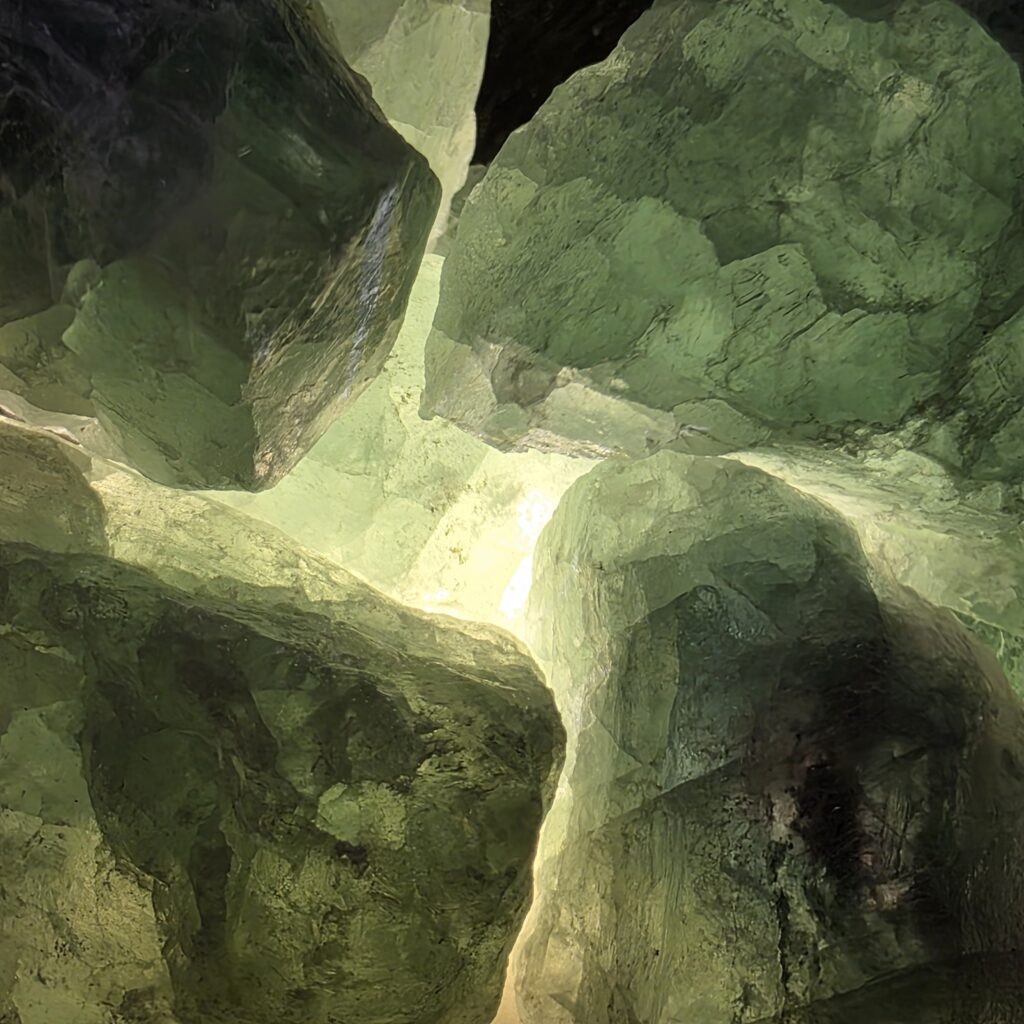
There are two types of jade stone and most people don’t know the difference. When most people picture jade, they see a smooth green stone — calm, cool, ancient. But what they may not know is that “jade” is actually two completely different minerals. Jadeite and nephrite share a name and a reputation, but they come from different parts of the earth, carry different histories, and feel different in the hand. Understanding the types of jade stone is the first step to understanding why this stone has meant so much to so many people for so long.
The Two Types of Jade Stone
Understanding the different types of jade stone starts with one key fact: jadeite and nephrite are not the same mineral.
Jadeite
Jadeite is the rarer of the two. It forms deep in the earth under intense pressure, primarily in Myanmar, and is prized for its translucency and vivid color range. When people talk about imperial jade — the deep, even, emerald green that has been treasured in China for centuries — they are talking about jadeite.
Jadeite comes in more colors than most people expect: green, white, lavender, yellow, black, and red. Each color carries its own energy and symbolism, but green remains the most revered. In Chinese tradition, the finest green jadeite was reserved for emperors and considered more valuable than gold.
Nephrite
Nephrite is the older story. It has been carved, worn, and traded across Asia for over 7,000 years — long before jadeite was widely known in China. Nephrite is tougher than jadeite, with a waxy, softer luster. It tends toward deeper, more muted greens, as well as creamy whites and greys.
In Chinese culture, nephrite is the stone most associated with the concept of 玉 (yù) — the jade of scholars, rituals, and moral virtue. It was believed to embody the five virtues: benevolence, wisdom, courage, justice, and purity. To wear nephrite was to carry those qualities with you.
Jade Stone Colors and Their Meanings
Beyond the jadeite and nephrite distinction, jade carries meaning through its color. Here is what each shade is traditionally associated with:
Green jade is the most recognized variety. It represents growth, balance, and harmony — a connection to the natural world and to the steady rhythms of life. Green jade is grounding. It is the color of things that grow slowly and last.
White jade carries associations with clarity, calm, and new beginnings. In many traditions it is connected to purity of intention — the mind settling into stillness before action.
Lavender jade is rarer and more delicate. It is often associated with emotional healing, intuition, and the quiet inner life. People drawn to lavender jade tend to be drawn to reflection.
Why Natural Jade Still Matters
In an age of resin imitations and dyed glass, natural jade stone carries something those materials cannot replicate: genuine geological history. Every piece of jadeite or nephrite took millions of years to form. Every grain pattern is unrepeatable. When you hold a piece of natural jade, you are holding something that the earth made slowly — which is perhaps why it has always been associated with patience, calm, and long life.
At Still., we work exclusively with natural green jade. Not because it is the rarest or most expensive variety, but because it is real. When our jade stone lamp glows softly from within, the light passes through actual stone — through grain patterns formed over geological time, through a material that cultures across the world have reached for when they needed to feel grounded.
That is what natural jade does. It reminds you to slow down. And that is exactly what we built Still. around.
Whether you are drawn to jadeite for its color or nephrite for its history, both types of jade stone carry something that synthetic materials simply cannot replicate: time. Knowing the types of jade stone is the first step to choosing one that feels right for your space.