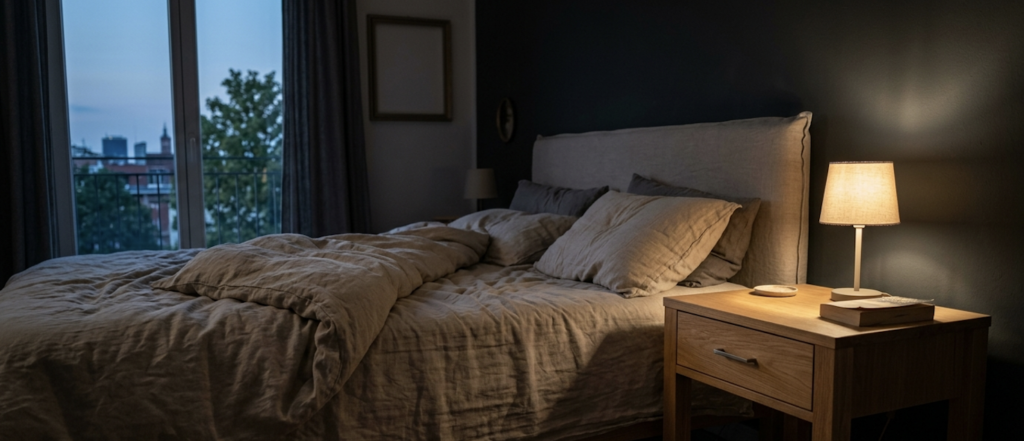
Most lamps are placed where the light is needed. A jade stone lamp works differently. It is not bright enough to light a room and it was never meant to be. What it does is mark a place as quiet, which means the question is not where the light is missing but where the stillness should live.
Here are four placements that tend to work, and one that does not.
Beside the bed
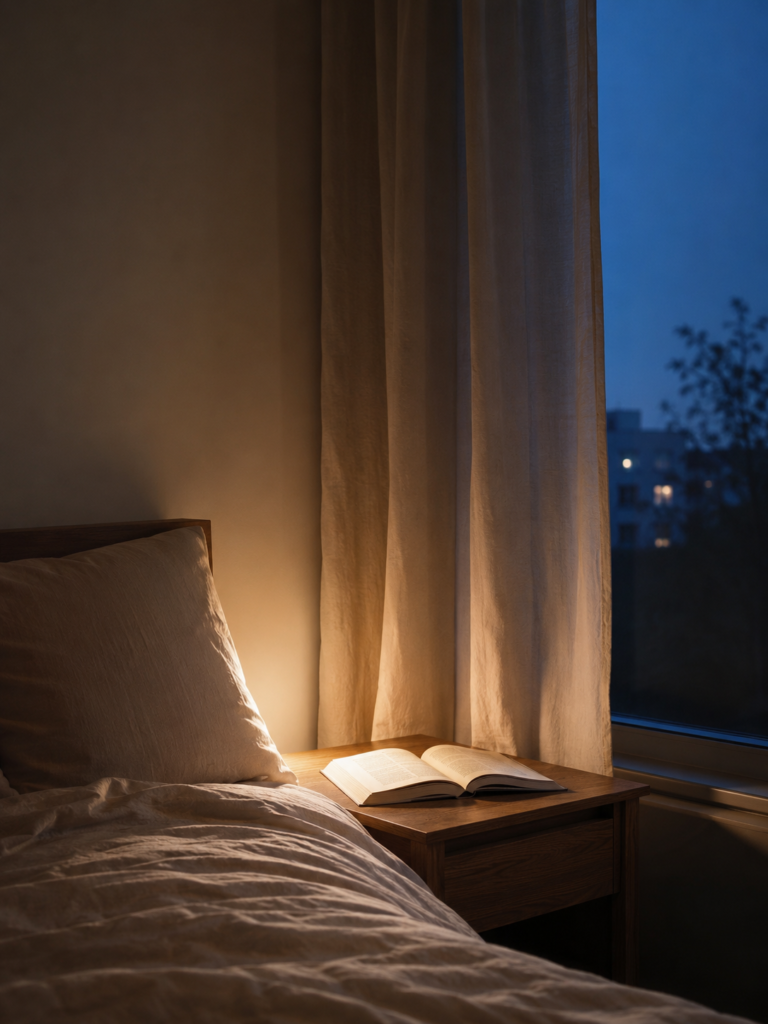
This is where most people put theirs, and the reason is practical rather than aesthetic. The last light you see before sleeping shapes how easily you get there. Overhead lighting and phone screens both tell the nervous system that the day is still running. A low green glow says the opposite.
If you keep it on the nightstand, put it on the side away from your dominant hand. You want it to be something you turn off deliberately, not something you knock over reaching for water.
It also works as the only light on during the last twenty minutes of the evening. Read by it if you can. If the text is too dim, that is usually a sign the day should have ended already.
On the desk, at the end of the workday
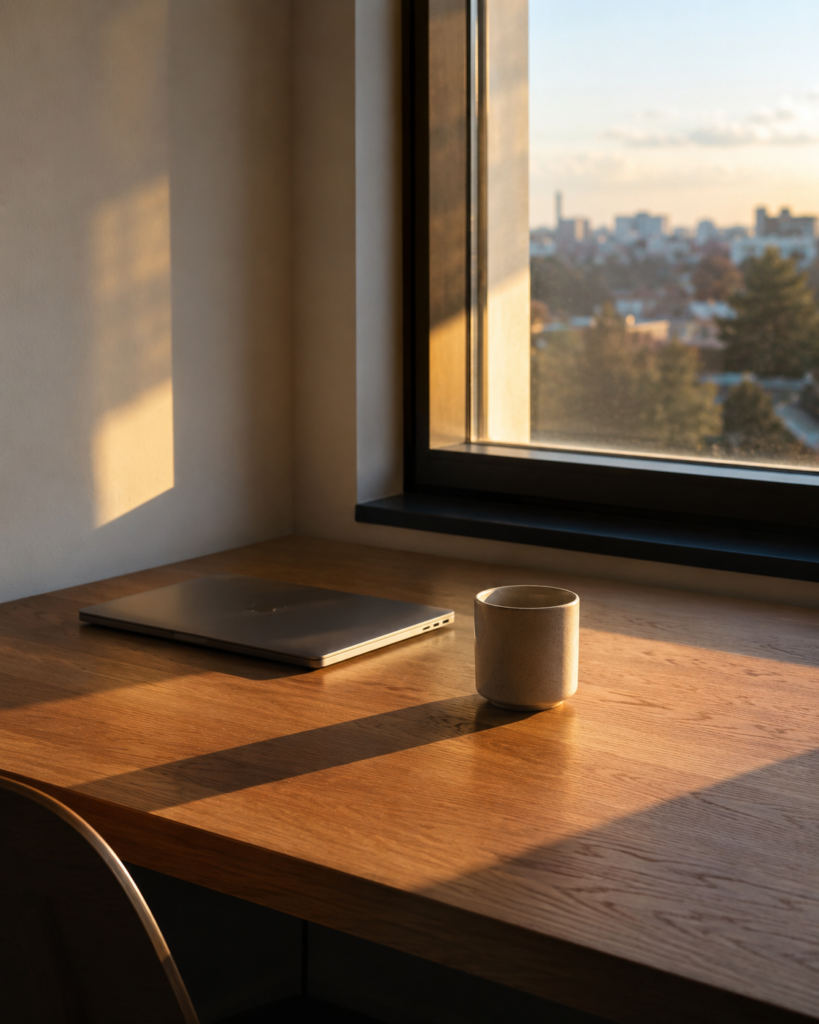
A desk lamp is a working object. It exists to make things legible. That is useful until six in the evening, when the same light keeps signalling that there is more to do.
Switching from a task lamp to a jade lamp is a small physical act that ends the day. Nothing on the desk changes except the quality of the light, and yet the room reads differently. Some people pair it with closing the laptop lid. The two together become a single gesture.
This placement works best on a surface that is otherwise clear. A stone lamp surrounded by cables and paper loses most of what it offers.
In a healing corner
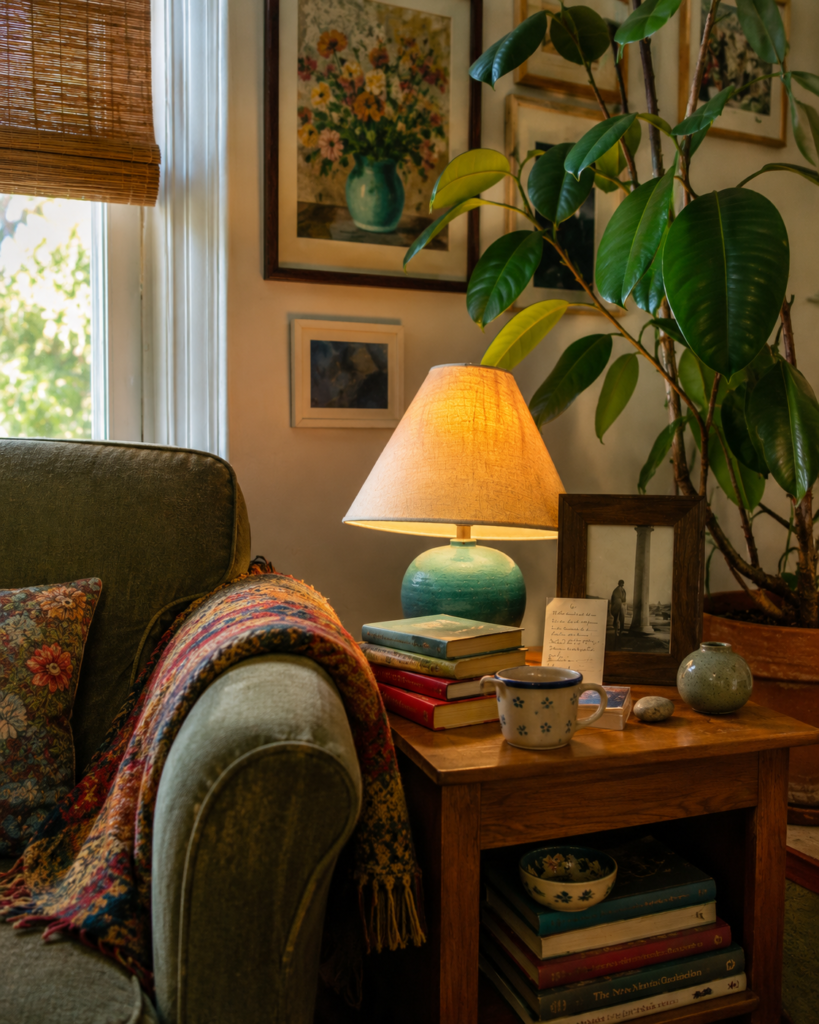
If you already have a corner set aside for sitting, breathing, or doing nothing in particular, the lamp belongs at floor level or just above it, not overhead. Light that comes from below or beside you feels contained. Light from above feels observed.
A meditation lamp is useful here for a reason that has little to do with mood. It functions as a cue. Turning it on marks the beginning of the practice, and turning it off marks the end. This matters more than most people expect, because the hardest part of a short daily practice is not the practice itself but deciding when it has started.
The stone helps too. Jade is cool and dense, and holding it for a moment before you sit gives the hands something to do while the mind slows down.
In a hallway or on a shelf, left on
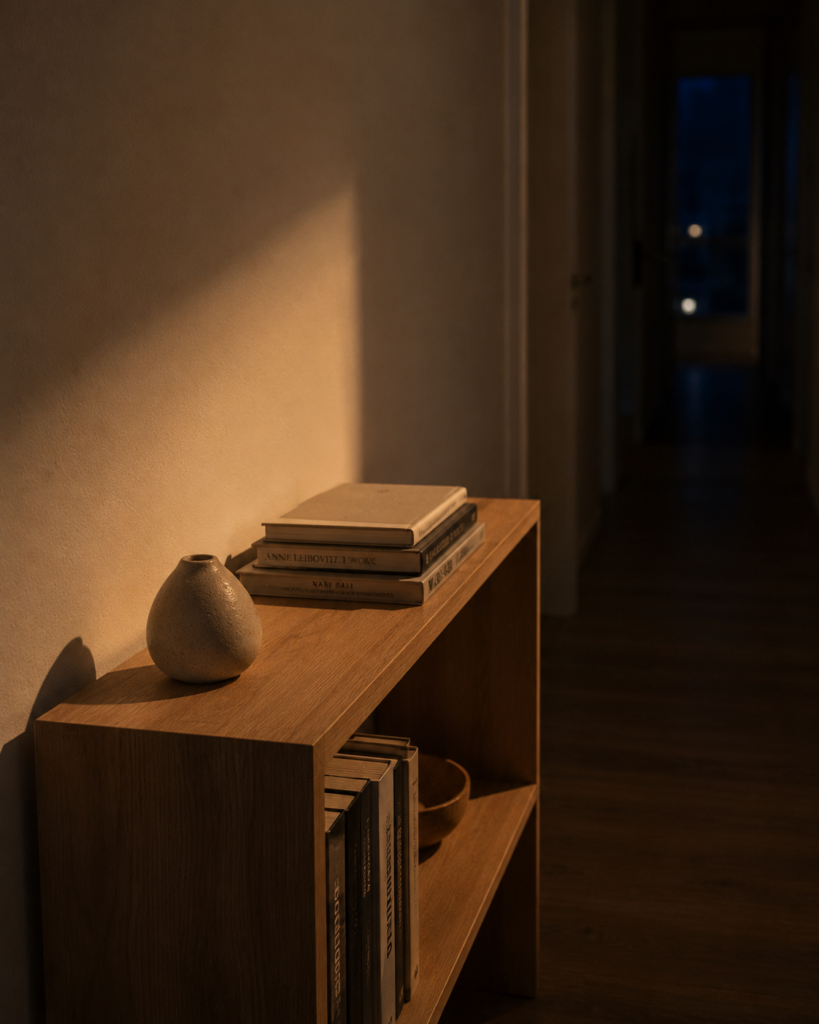
Not every placement needs a purpose. A jade lamp on a bookshelf or in a hallway, left on through the evening, changes how a home feels to walk through. It is the difference between a house that is switched off and one that is resting.
This is also the placement that shows the material best. From a distance, the light collects in the stones unevenly. Some pieces glow, some stay dark, and the pattern shifts depending on where you stand. Resin and dyed glass cannot do this because they are uniform all the way through. Natural stone is not.
Where it does not work
The kitchen counter, or anywhere else that stays busy. A jade lamp asks for a surface that is not doing anything else. Put it somewhere with movement and noise and it becomes decoration, which is a waste of a material that took millions of years to form.
The same applies to placing it near a bright light source. In a well-lit room the glow disappears entirely. It needs dimness to do anything at all.
The pattern underneath
What these placements have in common is that none of them are about lighting. They are about marking a boundary in time. The end of the working day. The beginning of a short practice. The last hour before sleep.
Slow living is often described as a set of habits, but in practice it is usually a set of signals. Something has to tell you that this part of the day is different from the last one. A light that is warm and low and made of real stone does that quietly, without requiring you to remember anything.
Our natural jade stone lamp was built around that idea. Where you put it matters less than what you decide it means.
Light the quiet within.